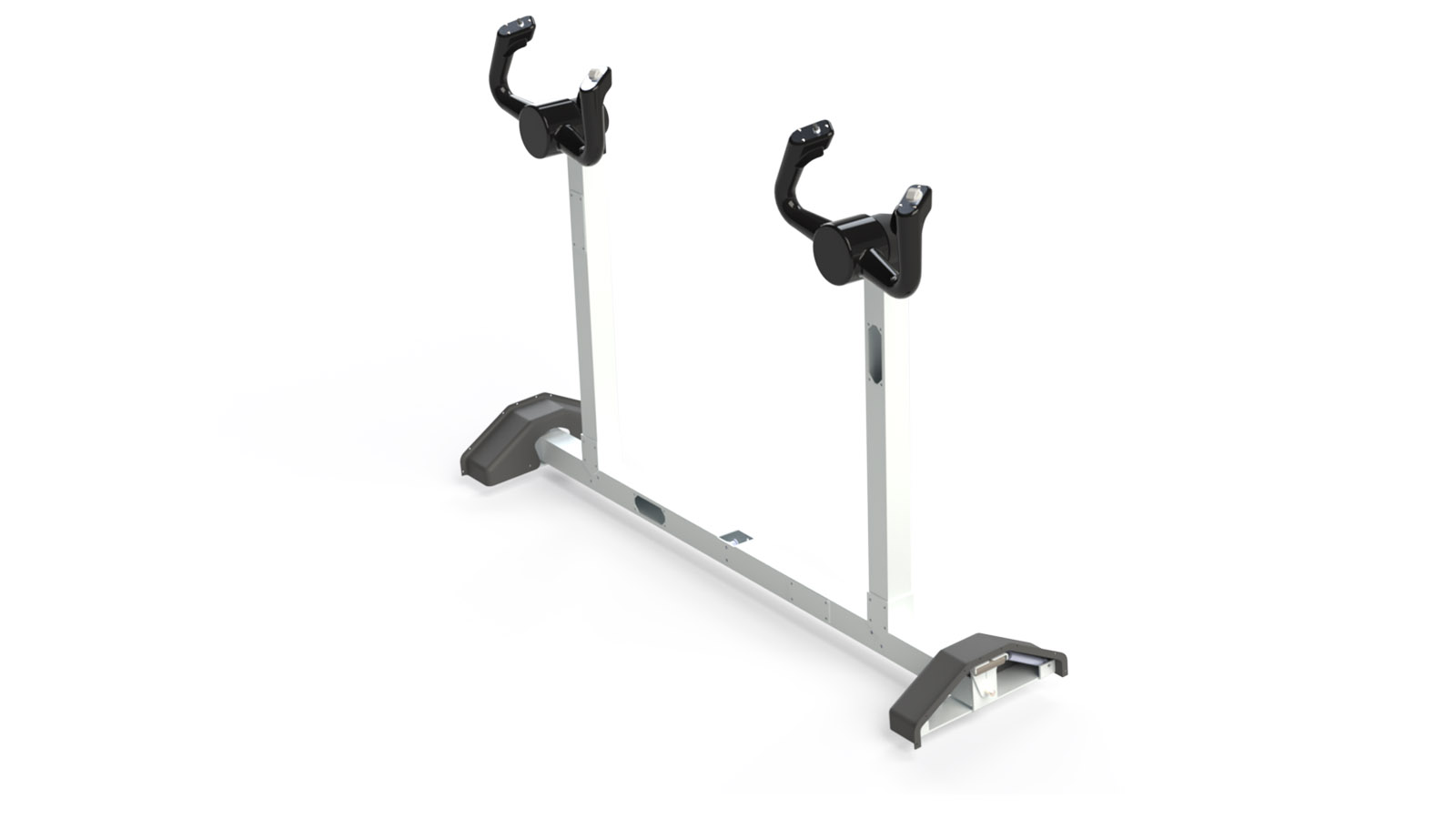
New linked yoke and rudder systems are being developed so both pilot positions can share control inputs during instruction and crew training.
Dual controls are central to instructor-led training. Our current development work covers both floor-standing and console-mounted yoke arrangements, together with linked rudder and brake controls.
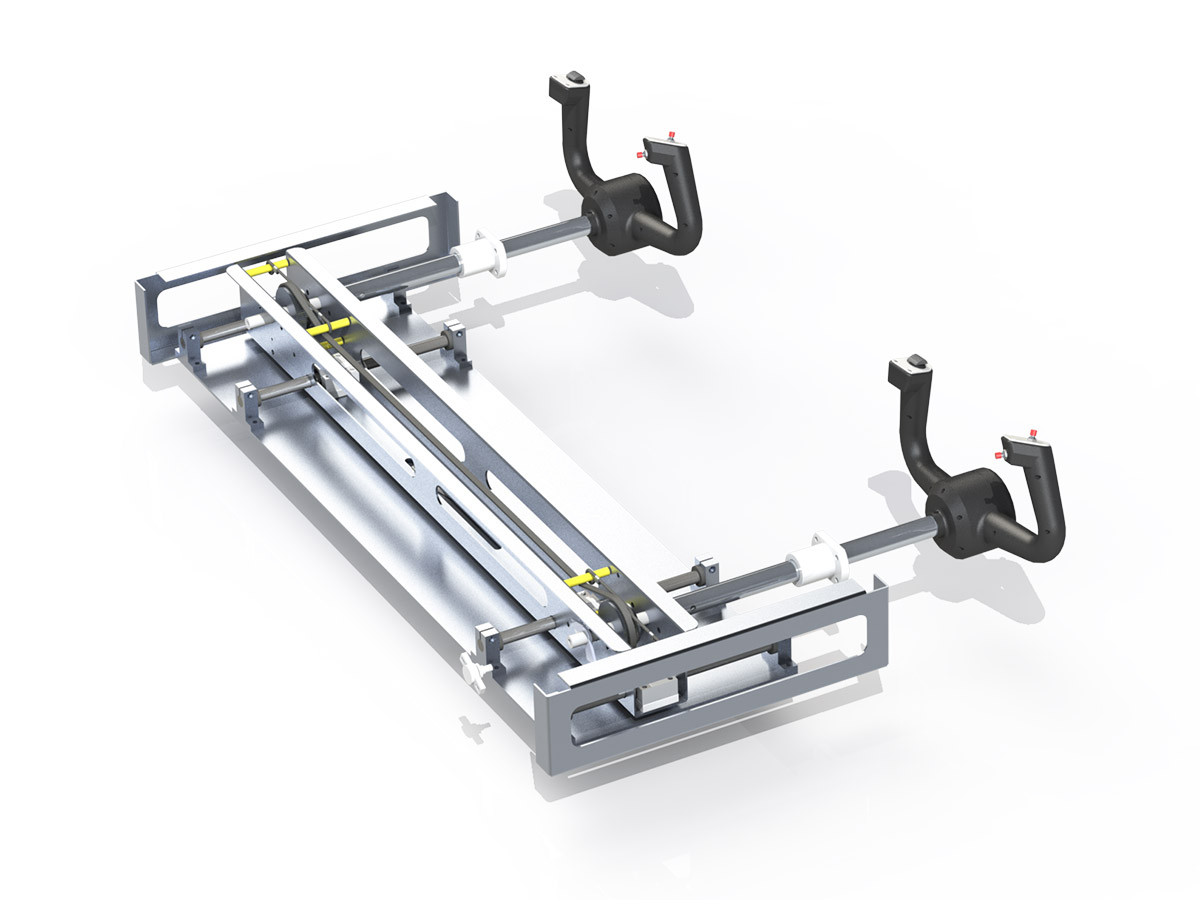
Two yoke installation options
Both yoke systems use Sim-Mech yokes with electric trim, autopilot disconnect and push-to-talk controls. Spring loading and damping are used to create a controlled, progressive response, while Hall-effect sensors and a 12-bit Leo Bodnar USB interface provide dependable position sensing.
Key design targets
- Up to 179° of aileron rotation at the yokes
- Representative elevator and rudder travel
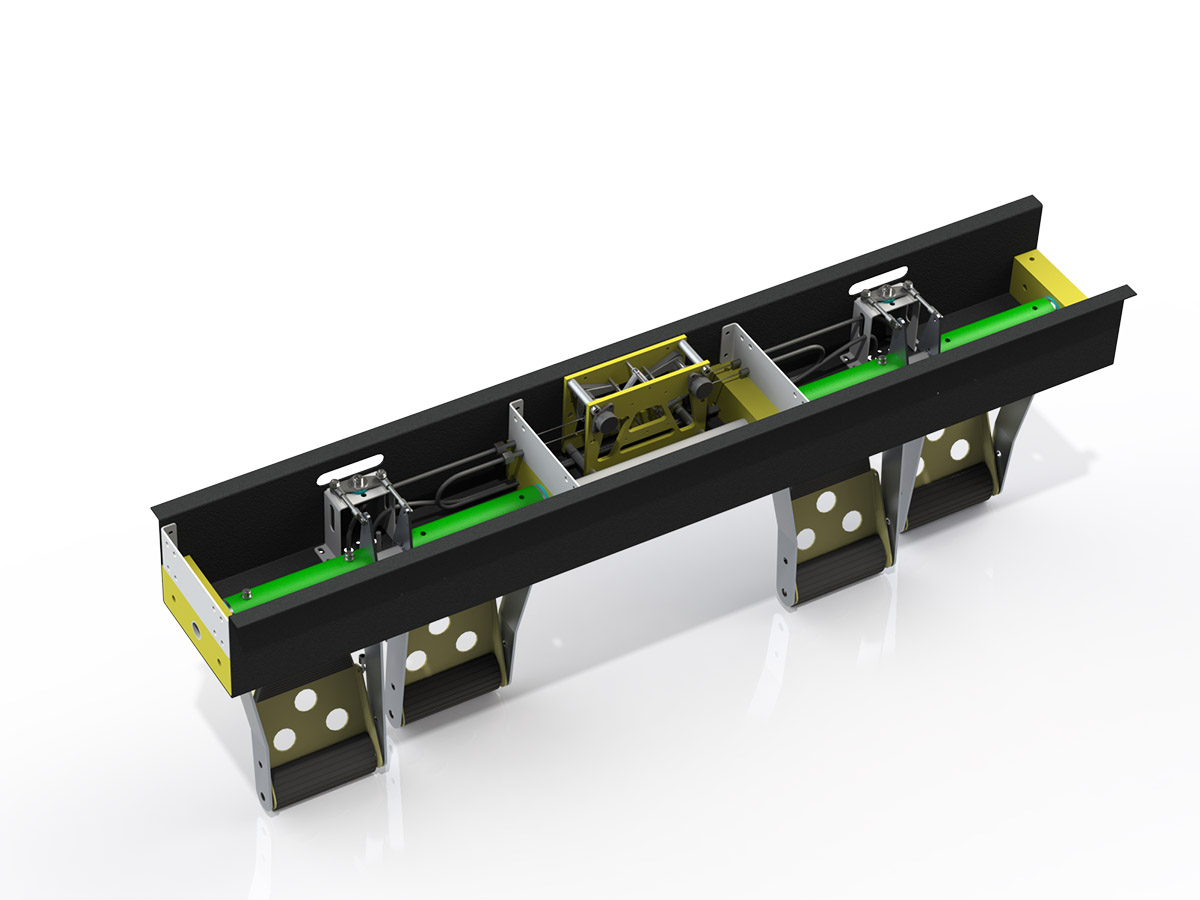
- Linked braking inputs from either pilot position
- Hall-effect sensing with a 12-bit USB interface
- Optional force-feedback integration as a future development
The dual rudder system uses a master cylinder to share rudder and brake inputs between both positions. Mounted beneath the dual-yoke console, it is intended to provide natural handling both on the ground and in flight.
Designed for instruction
Linked controls allow an instructor to demonstrate, monitor and take over an exercise naturally. That interaction is important for training value, not simply cockpit appearance.
Leave a Reply